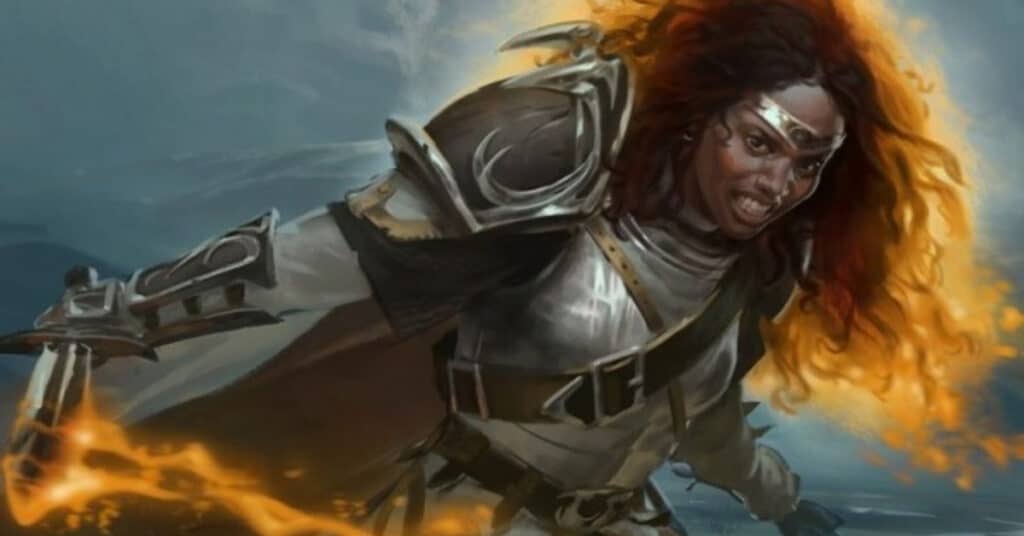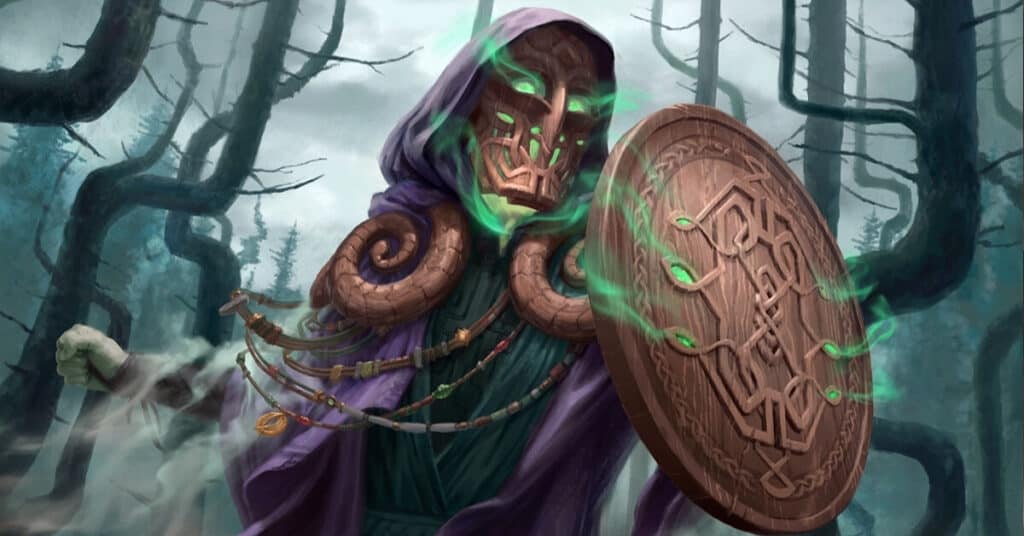


Image created using CharGen
Introduction to Creating a Character in DnD 5.24
Creating a character is your first step into the wonderful world of Dungeons & Dragons. Your character is the conduit between you and the world your DM has lovingly prepared for your enjoyment. So, it’s crucial that you take your time and ensure that your character is built the way you want to play them. This process can be quite involved, but we’ve broken down the major components of character creation in D&D 5.24 for you to take all the difficult thinking out of the equation. Let’s examine the character creation process in the new D&D 5.24 ruleset.
The Character Sheet
One thing that veteran D&D players will notice is that the character sheet is significantly more detailed than it has been in past iterations. While previous character sheets included core sections like ability scores, saves, and spell slots, the newest character sheet breaks those sections down further to improve ease of access for new players. The character sheet is available in the Player’s Handbook (PHB) and as a downloadable PDF from the D&D Beyond website that DMs and players can print out and physically fill out. Check out the fillable and printable character sheets below.
Character Level & Experience
The first thing players should determine for their character sheets is their level. While it might seem like the obvious answer is to start at level one, players should actually seek guidance from their DMs to determine what level they should start at. Different adventures have different starting levels and your DM may have prepped an adventure with a starting level higher than you anticipated. So, check with your DM about what level you should start your character at.
Players should also mark down how much experience they’ve gained so they can accurately determine when it is time to level up. Failing to level-up your character due to improper experience tracking can lead to accidental deaths and party wipes.
Starting at Higher Levels
When starting at higher levels, your character has more available to them. If you are a first-time player, it’s best to seek guidance from your DM as they know how to best help your character fit into the setting and adventure. However, starting at higher levels means there will be more initial information to fit into your character sheet.
For starters, characters of level 3 and higher will need to choose a subclass for their main class. There are many changes to subclasses in D&D 5.24 that players should be aware of that will be explored in a more in-depth article.
Select an Origin
Players of previous editions of Dungeons & Dragons will notice that the origin system has changed in the 5.24 edition. One major difference that veteran players will notice is that the origin system now influences one’s Ability Scores. (See our Ability Score section below.) Previous iterations used the former race system (Now referred to as “Species”) to determine which Ability Scores were naturally boosted at the start of the game.
Backgrounds
Choosing your background is now how players access their natural Ability Score modifier boosts. While choosing a background that makes sense for your class is recommended for players that are aiming to “win” the game (but is there really a winner in storytelling?), some players may choose incongruent backgrounds and classes for flavor. Neither of these approaches is naturally better or worse than others, but knowing how your party members intend to play can help you choose an approach that makes the most sense for party synergy. After all, a joke character can be fun in a setting that works with them, but entirely obnoxious when the party is trying to defeat the Big Bad Evil Guy (BBEG) and the joke is getting in the way.
| Ability Score | Backgrounds That Buff |
| Strength | Artisan, entertainer, guard, soldier, sailor, noble, farmer |
| Dexterity | Artisan, charlatan, entertainer, criminal, guide, soldier, sailor, wayfarer, scribe |
| Constitution | Charlatan, criminal, hermit, guide, farmer, wayfarer, merchant, sage, soldier |
| Intelligence | Acolyte, artisan, guard, criminal, merchant, noble, scribe, sage |
| Wisdom | Acolyte, farmer, hermit, guide, sage, sailor, scribe, wayfarer |
| Charisma | Acolyte, entertainer, charlatan, merchant, hermit, wayfarer, noble |
Feat
In previous editions, feats were an optional part of the game, especially at low levels where they could be scarce. However, 5.24 has made feats more accessible, including giving out one feat in your origin. It’s important to note this information, including what the feat does if you might forget. After all, you may find that feat has uses in your adventure that you never would have guessed!
Proficiencies
Your background also gives you a proficiency bonus with two skills and one tool. There are multiple sources of proficiencies, including a player’s class and level. However, the origin system hands out two additional proficiencies to the player at the beginning of the game to give them a solid power boost in adventuring.
Starting Equipment
A player’s starting equipment is determined by their class and their background. It will also include an amount of coins that players can immediately spend on additional equipment. In addition to the starting equipment, players are allowed to have one trinket. Trinkets do not incur an additional cost and can be selected from the trinket table by rolling a D100 or, if your DM allows it, active selection. Refer to the Trinket Table on page 46 of the PHB to determine what options there are for trinkets.
Choose a Species
Formerly referred to as the “Race” system, the new “Species” system might have a new name, but it’s more or less the same as the old system. The most notable change is the removal of “half-“ species options, such as half-elf and half-orc. The species options from the PHB alone are as follows:
- Aasimar
- Dragonborn
- Dwarf
- Elf
- Gnome
- Goliath
- Halfling
- Human
- Orc
- Tiefling
Species determines your character’s speed and size, which should also be written down on your character sheet for posterity and ease of access.
Choose Your Languages
Languages are a key element of creating a character because it impacts who you can easily communicate with as your travel the world. Each character knows at least three languages. All characters in the game can speak the Common language, which is more or less just the name of the language that everyone uses interdependently within the Forgotten Realms. Individual species and nations have unique languages spoken only by those who have learned them, such as Common Sign Language, Draconic, and Elvish. Players can choose languages or roll from them on the table. The following languages are available in the PHB:
- Common Sign Language
- Draconic
- Dwarvish
- Elvish
- Giant
- Gnomish
- Goblin
- Halfling
- Orc
Rare languages are ones that come from other planes of existence or are considered dead languages in the Forgotten Realms. They can only be accessed using certain features that allow players to learn a rare language. They are as follows:
- Abyssal
- Celestial
- Deep Speech
- Druidic
- Infernal
- Priomordial (Aquan, Auran, Ignan, and Terran dialects available)
- Sylvan
- Thieves’ Cant
- Undercommon
Alignment
There are nine alignments which determine the most likely course of action in-game. During the game, a player’s alignment may shift if they take actions that go against their chosen alignment. This can be a normal part of story progression or something to be avoided depending on the specificity of the situation. The nine alignments are as follows:
- Lawful Good (LG): LG creatures want to do what is right according to what society says is right. A character who fights against general injustice and protects innocent people without hesitation or regard for their own safety would be lawful good.
- Neutral Good (NG): NG creatures do what they think is best without feeling overly bound by the rules of society. They will endeavor to do the right thing, but may split from wider society when choosing their actions, giving them the most flexibility within the Good archetypes. A character that is kind and helps others but does not sacrifice their own needs to do so would be Neutral Good.
- Chaotic Good (CG): CG creatures act on their conscience and couldn’t care less what other people think of their actions. They try to act for the greater good but may use inventive or unethical means to reach their goals. Robin Hood stealing from the rich to help the poor is an example of a chaotic good character.
- Lawful Neutral (LN): LN characters act in accordance with law, tradition, or personal codes. A character that acts strictly for the general good, but isn’t swayed by strong moral arguments or the temptations of evil would be lawful neutral.
- True Neutral (N): N characters attempt to avoid moral arguments in general. They do what seems best at the time but don’t follow a strict moral ethos, nor are they swayed by the temptations of evil.
- Chaotic Neutral (CN): CN creatures follow whims. Their prime objective is personal freedom with little regard for how their actions affect other people. A wandering thief who survives based on their wits and the lay of the land is probably chaotic neutral.
- Lawful Evil (LE): Lawful evil characters take what they want, when they want it. However, they follow a strict code or ethos derived from their tradition, loyalty, or order. A good example of a lawful evil character would be an oil baron who exploits his workers but never runs afoul of the letter of the law.
- Neutral Evil (NE): Neutral evil creatures do not care for the law in spirit or in letter, but retain some level of method to their madness. They pursue their desires, unhindered by the constraints of decent society. A criminal who robs and murders people throughout the land but not at random is probably Neutral Evil.
- Chaotic Evil (CE): CE characters consider themselves the law. They act with arbitrary violence and cruelty, often driven by hatred, vengeance, or bloodlust. Many BBEGs are chaotic evil. Players should be cognisant when choosing to play chaotic evil characters as they often run into conflicts with party members who have a strong moral code. CE player characters are for veteran players who know how to exercise their alignment without stepping on other players’ toes.
Players can either roll for or choose their alignment. D&D’s core rulesets assume that all player characters are good or neutral. Consult your DM if you want to make an evil character, especially a chaotic evil one, as these characters can cause friction amongst the party members.
Hit Points
Level one hit point totals are calculated using the following table:
| Barbarian | 12 + Constitution Modifier |
| Fighter, Paladin, or Ranger | 10 + Constitution Modifier |
| Bard, Cleric, Druid, Monk, Rogue, or Warlock | 8 + Constitution Modifier |
| Sorcerer or Wizard | 6 + Constitution Modifier |
Remember that only your modifier is added to your total hit points, not the entirety of your Constitution score. The necessity of adding Constitution modifiers to your hit points means that, if possible, you should never have a negative constitution modifier. Having a negative constitution modifier will cause you to lose hit points both on your base stat and when leveling up.
Skills, Saving Throws, and Passive Perception
Finally, you’ll need to calculate your saving throws and passive perception. These are based on your character’s Ability Score modifiers and will be different for each character. If your character has proficiency in a skill or saving throw, you must add your proficiency modifier to the saving throw or skill modifier.
- About the Author
- Latest Posts

When I’m not writing about RPGs, I’m playing Dungeons & Dragons, Magic: the Gathering, Yu-Gi-Oh!, X-Wing miniatures, and many other lovingly-crafted tabletop games with the people I love.